About
Entangled is a collaboration between leading psi researchers, technologists, and Psyleron—the R&D company emerging from Princeton's PEAR lab.
Creators & Advisors
Contributors
- Robert Jahn, PhD
- Brenda Dunne
- Michael Mazzola
- Cassandra Vieten, PhD
- Loren Carpenter
- Larry Dossey, MD
- Peter Capuciati
- Joey Primiani
- Mirko Kiefer
- Mikey Siegel
- Adrian D. Nelson
- Herb Mertz
- Hale Brownlee
- Todd Gibbons
- Sloba Gajic
- Institute of Noetic Sciences
- Global Consciousness Project
- Bionatus
- Superfuture Labs
- Bial Foundation
- Psyleron
- Many others 💚
Research
Entangled is based on a couple core assumptions: that consciousness interacts with quantum systems (e.g. physical RNGs), and that consciousness can access information across time. While controversial, the assumptions are supported by scientific data, and in general becoming less controversial.
The complete body of supporting research is too extensive to reproduce here, but listed below are some good starting places.
Consciousness can influence quantum systems

Psychophysical interactions with a single-photon double-slit optical system
Six experiments were conducted using a single-photon double-slit apparatus to test von Neumann's notion that the quantum wavefunction is "collapsed" by what he called a psychophysical interaction. Individuals were asked to direct their attention toward or away from the optical system while receiving information about the number of photons arriving per second at an interference fringe minimum. Overall the experiments found evidence supportive of an interaction that appears to "steer" the wavefunction to either reduce or to sharpen interference fringes. This outcome informs efforts to unify subjective and objective modes of apprehending the world because it suggests that these two apparently different ways of knowing may be complementary aspects of a unitary phenomenon, analogous to how a Möbius strip appears to have two sides, but when examined is found to have only one. The correlations observed in our experiments can be interpreted in two main ways: as a form of mind-matter interaction, which implies a dualistic model, or as arising from a common source, which implies a monist model. We propose that a monist model is a more satisfying explanation.

Consciousness-related interactions in a double-slit optical interferometer
Motivated by a series of reported experiments and their controversial results, the present work investigated if volunteers could causally affect an optical double-slit system through mental efforts alone. The participants task alternated between intending the increase of the (real-time feedback informed) amount of light diffracted through a specific single slit and relaxing any intention effort. The 160 data sessions contributed by 127 volunteers revealed a statistically significant 6.37 sigma difference between the measurements performed in the intention versus the relax conditions (p = 1.89 × 10, es = 0.50 ± 0.08), while the 160 control sessions conducted without any present observer resulted in statistically equivalent samples (z = −0.04, p = 0.97, es = 0.00 ± 0.08). The results couldn't be simply explained by environmental factors, hence supporting the previously claimed existence of a not yet mapped form of interaction between a conscious agent and a physical system.

Correlations of random binary sequences with pre-stated operator intention: A review of a 12-year program
Professor Robert Jahn, Dean of Princeton University's School of Engineering and Applied Science, summarizes the first 12 years of his lab's investigation into the influence of consciousness on random physical systems. Over 1000 experimental series using different random devices revealed anomalous mean shifts, each deviating from chance by around 10⁻⁴ bits per bit processed. Although small, the effects were consistent across a massive database with a total effect exceeding 7σ (p ≈ 3.5 × 10⁻¹³). Results were similar regardless of operator location or timing, but deterministic pseudorandom sources showed no anomalous mean shifts.

Correlations of continuous random data with major world events
The relationship between consciousness and physical systems is often explored theoretically, particularly in the context of quantum theory's challenges. However, experiments using a global network of random number generators have revealed unexpected patterns linked to significant world events. While random samples from the four-year archive appear normal, pre-selected samples tied to major events show notable deviations in their distributions. These anomalies correlate with the intensity of daily news and were especially pronounced in the data surrounding September 11, 2001. Contextual analysis suggests that these deviations cannot be explained by known physical factors and may instead be linked to human consciousness.
Consciousness can access information across time

Predicting the unpredictable: Critical analysis and practical implications of predictive anticipatory activity
A recent meta-analysis involving 26 experiments from seven independent labs suggests that human physiology can anticipate stimuli 1-10 seconds before they occur, distinguishing between types such as emotional versus neutral images or sound versus silence (Mossbridge et al., 2012). This phenomenon, referred to as predictive anticipatory activity (PAA), involves unconscious physiological changes in the cardiopulmonary, skin, and nervous systems that precede future events. Although similar to precognition, which is a conscious awareness of future events, PAA specifically relates to unconscious physiological reactions. The study explores the potential mechanisms and theoretical implications of PAA, addressing challenges like expectation bias and the integrity of multiple analyses.

The experimental evidence for parapsychological phenomena
This article presents a comprehensive integration of current experimental evidence and theories about so-called parapsychological (psi) phenomena. Throughout history, people have reported events that seem to violate the common sense view of space and time. Some psychologists have been at the forefront of investigating these phenomena with sophisticated research protocols and theory, while others have devoted much of their careers to criticizing the field. Both stances can be explained by psychologists' expertise on relevant processes such as perception, memory, belief, and conscious and nonconscious processes.
This article clarifies the domain of psi, summarizes recent theories from physics and psychology that present psi phenomena as at least plausible, and then provides an overview of recent/updated meta-analyses. The evidence provides cumulative support for the reality of psi, which cannot be readily explained away by the quality of the studies, fraud, selective reporting, experimental or analytical incompetence, or other frequent criticisms. The evidence for psi is comparable to that for established phenomena in psychology and other disciplines, although there is no consensual understanding of them.

Feeling the future: Experimental evidence for anomalous retroactive influences on cognition and affect
In a series of nine experiments involving over 1,000 participants, researchers investigated the phenomena of precognition and premonition, which are said to be subcategories of psi - the anomalous transfer of information or energy that cannot be explained by current scientific understanding. The experiments tested for retroactive influence by reversing the order of well-established psychological effects, so that participants' responses were recorded before the supposed causal stimulus occurred. The results showed significant effects in precognitive approach to erotic stimuli, precognitive avoidance of negative stimuli, retroactive priming, retroactive habituation, and retroactive facilitation of recall. The findings suggest the possibility of anomalous retroactive influence, but the authors also discuss skepticism surrounding psi, challenges in replication, and potential theoretical explanations.

A meta-analysis of 90 experiments on the anomalous anticipation of random future events
In 2011, one of the authors (DJB) published a report of nine experiments in the Journal of Personality and Social Psychology purporting to demonstrate phenomenon traditionally denoted by the term precognition. To encourage replications, all materials needed to conduct them were made available on request. We here report a meta-analysis of 90 experiments from 33 laboratories in 14 countries which yielded an overall effect greater than 6 sigma, z = 6.40, p = 1.2 × 10 (-10 ) with an effect size (Hedges' g) of 0.09. A Bayesian analysis yielded a Bayes Factor of 5.1 × 10 (9), greatly exceeding the criterion value of 100 for "decisive evidence" in support of the experimental hypothesis. When DJB's original experiments are excluded, the combined effect size for replications by independent investigators is 0.06, z = 4.16, p = 1.1 × 10 (-5), and the BF value is 3,853, again exceeding the criterion for "decisive evidence." The number of potentially unretrieved experiments required to reduce the overall effect size of the complete database to a trivial value of 0.01 is 544, and seven of eight additional statistical tests support the conclusion that the database is not significantly compromised by either selection bias or by intense " p-hacking" (the selective suppression of findings or analyses that failed to yield statistical significance). P-curve analysis, a recently introduced statistical technique, estimates the true effect size of the experiments to be 0.20 for the complete database and 0.24 for the independent replications, virtually identical to the effect size of DJB's original experiments (0.22) and the closely related "presentiment" experiments (0.21).

Consciousness in the Universe: A review of the 'Orch OR' theory
The nature of consciousness and its mechanisms remain a mystery, but the Orchestrated Objective Reduction (Orch OR) theory proposes that consciousness arises from orchestrated quantum processes within microtubules in brain neurons. These processes regulate neuronal activity and culminate in moments of conscious awareness, linking brain function to the universe's quantum mechanics and space-time geometry. Recent developments in quantum biology, neuroscience, and cosmology are reviewed, including a novel theory that microtubule vibrations could be responsible for EEG correlates of consciousness. Ultimately, the theory concludes that consciousness has an intrinsic role in the universe.

Fusions of consciousness
A new mathematical theory posits that the universe isn't fundamentally composed of physical entities like space, time, and particles but arises from the interactions between networks of conscious minds. It defines a "conscious agent" as a mathematical object with specific experiences and probabilistic rules governing their interrelation. The theory suggests that particles and objects in spacetime may represent information flow patterns between these conscious agents, similar to how a computer desktop abstracts deeper computations. Though still in its early stages, this theory offers a novel perspective on how consciousness could shape the physical world.
Pop-sci summaries

Your consciousness can interact with the whole Universe - Scientists
Nobel Laureate Roger Penrose and anesthesiologist Stuart Hameroff developed a theory called Orchestrated Objective Reduction, which posits that consciousness is a quantum process facilitated by microtubules in the brain's nerve cells. One implication is that consciousness can connect or entangle with quantum particles outside of the brain—anywhere in the universe, theoretically. Recently scientist Jack Tuszynski demonstrated that this is technically possible. Further, physicist Timothy Palmer's Invariant Set Theory posits, among other things, that quantum consciousness is the result of the universe operating in a particular geometric "state space." Although these theories don't definitively explain what consciousness is, they provide promising avenues for understanding its architecture and interaction with the universe.

Is consciousness part of the fabric of the Universe?
A theory called panpsychism proposes that consciousness is a fundamental aspect of reality.
Books
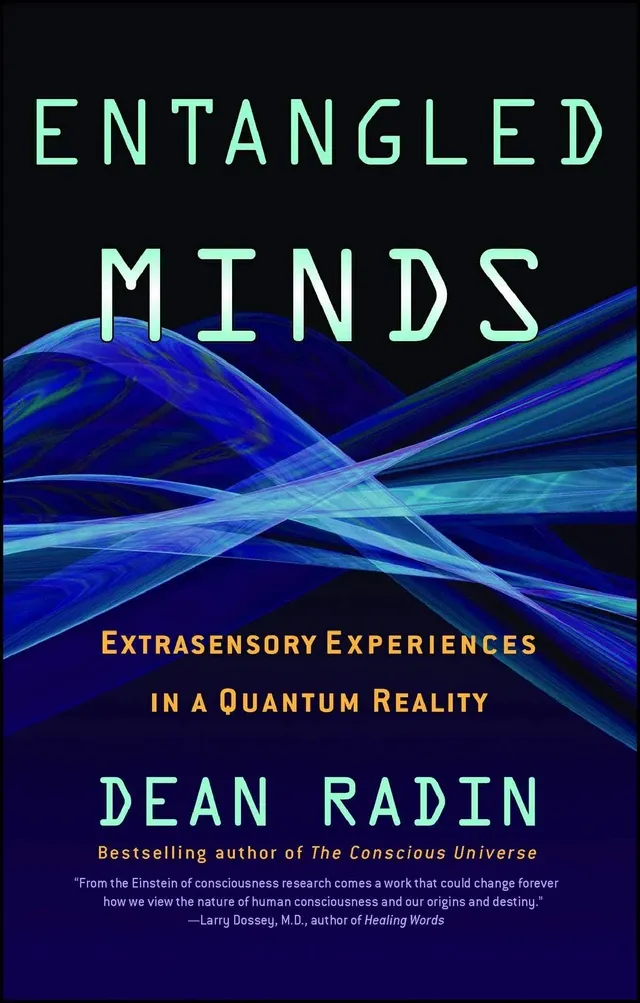
Entangled Minds
Makes the case that psychic experiences reflect a deep connectedness between minds, drawing on a century of laboratory evidence and the physics of quantum entanglement.
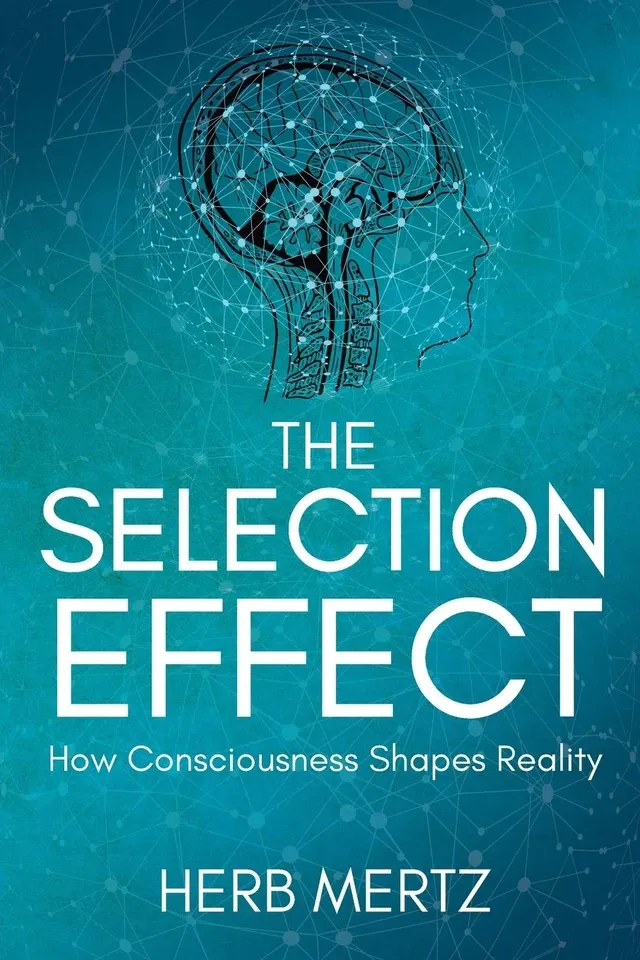
The Selection Effect
Provides rare insights into the subjective side of mind-matter interaction phenomena.
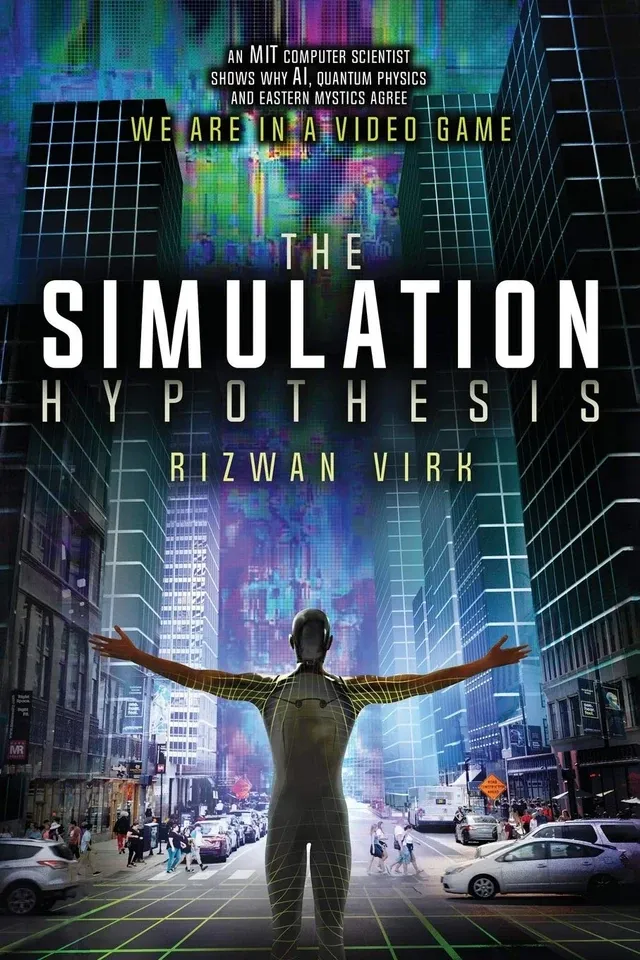
The Simulation Hypothesis
A computer scientist and video game pioneer explores the idea that our reality is a simulation, connecting AI, quantum physics and mystical traditions.
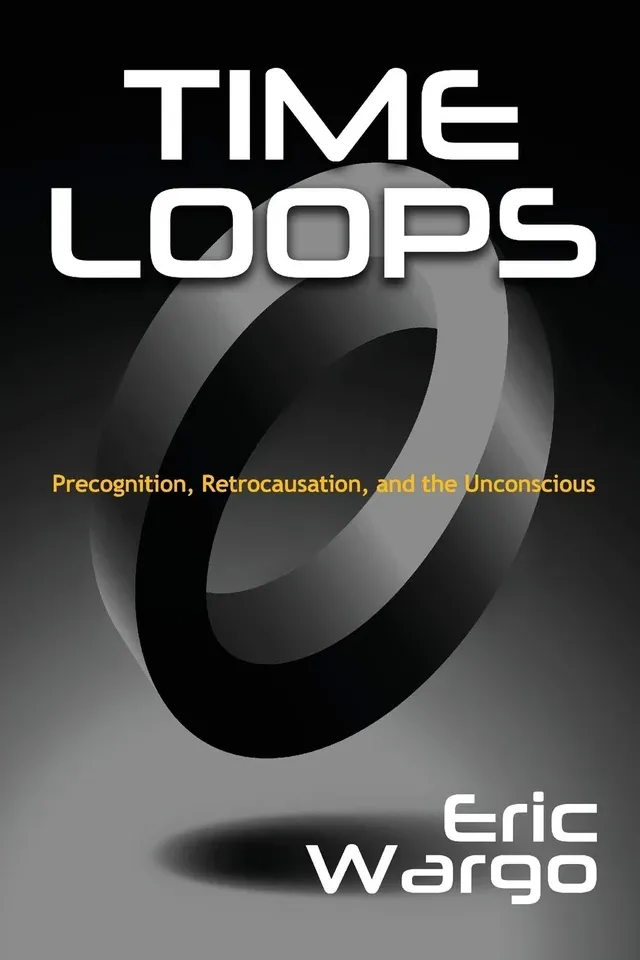
Time Loops
Argues that precognition is real, and that our dreams and intuitions carry information from our own future, drawing on research into retrocausation.
Contact
Send us a message here, or email hi@entangled.org.